Why Cheese Pizza Is the Perfect Comfort Food
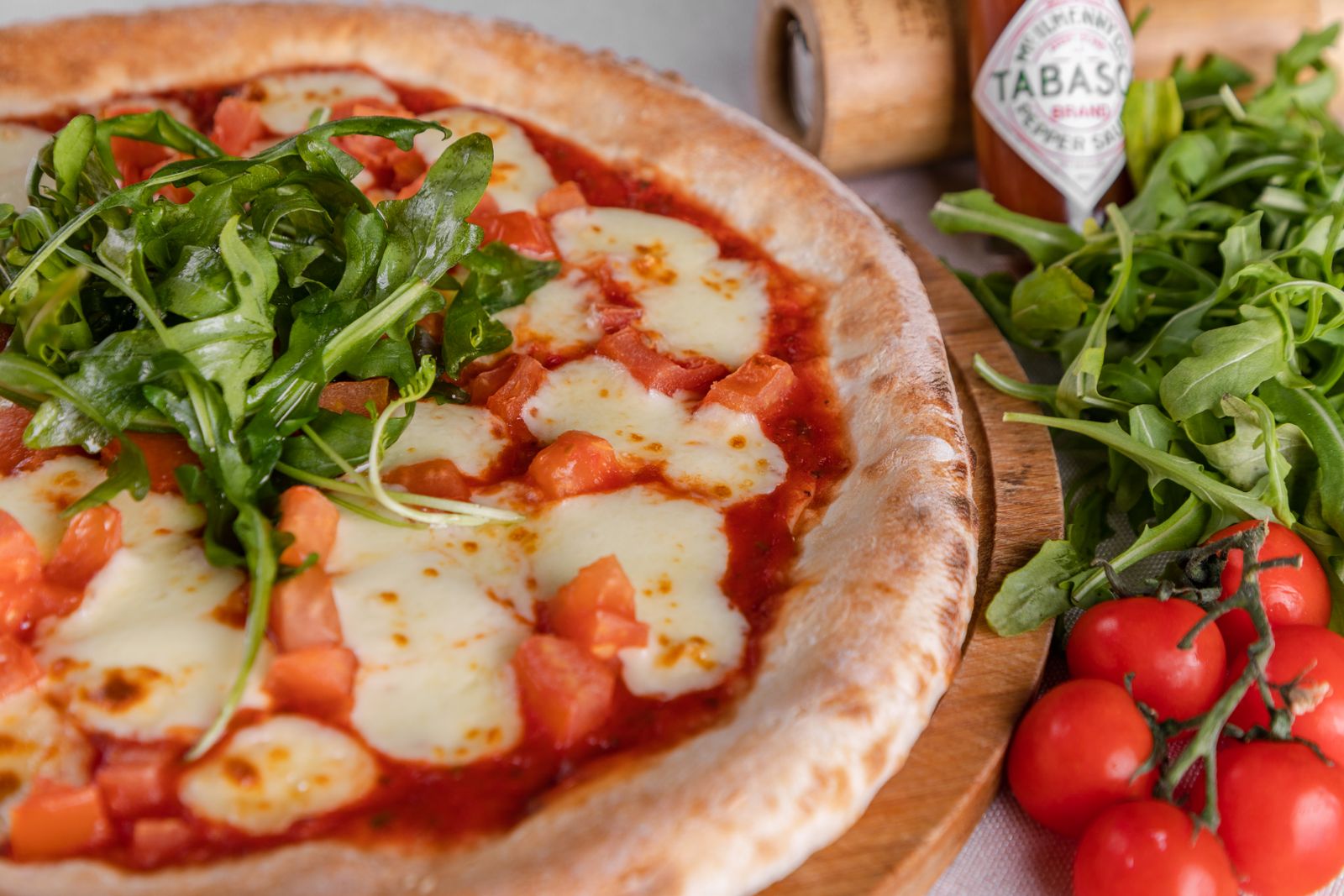
There are more elaborate foods than cheese pizza. There are more expensive foods, more technically impressive foods, and certainly trendier foods. Yet when people are tired, homesick, overwhelmed, or simply hungry in a deep, uncomplicated way, they rarely crave a tasting menu. They want something warm, familiar, and reliable. They want a meal that asks very little of them and gives a great deal back. That is where cheese pizza earns its place.
Comfort food is often described in sentimental terms, but the appeal is not just emotional. It is structural. The best comfort foods solve several problems at once. They satisfy hunger quickly, they feel generous rather than austere, and they offer enough sensory pleasure to quiet the noise of a rough day. Cheese pizza does all of that with remarkable efficiency. Its appeal is not accidental. It is built into the balance of crust, sauce, and melted cheese, into the way it is served, and into the role it has played in everyday life for generations.
A good slice of cheese pizza meets you where you are. If you are celebrating, it feels festive. If you are exhausted, it feels restorative. If you are alone, it still feels like company. That flexibility is rare, and it helps explain why cheese pizza remains one of the most dependable comfort foods ever made.
The comfort starts with familiarity
One reason comfort food works is that it removes uncertainty. After a long day, very few people want a culinary puzzle. They do not want to decode ingredients or wonder whether a dish will be too rich, too spicy, too precious, or simply disappointing. Cheese pizza offers instant recognition. Even before the box opens, you know the broad outline of the experience. There will be heat, softness, chew, acidity, salt, and that unmistakable pull of melted cheese.
Familiarity matters more than people admit. In professional kitchens and food businesses, one of the hardest things to engineer is trust. Diners say they want novelty, and sometimes they do, but regular habits are built on confidence. People return to food that behaves predictably. Cheese pizza, at its best, does exactly that. It has enough variation to stay interesting, New York slices, Neapolitan pies, tavern-style squares, pan pizza with crisp edges, but the core identity stays intact.
That predictability becomes especially powerful during stressful periods. Anyone who has worked late through deadlines, moved to a new city, cared for a sick family member, or managed a house full of children recognizes the relief of food that does not ask for analysis. You do not need to explain cheese pizza to anyone. A six-year-old understands it. So does a seventy-year-old. That broad acceptance is not trivial. It means the food can serve a whole room without friction, and shared ease is a genuine form of comfort.
It delivers the right kind of sensory pleasure
Comfort food is rarely subtle. It succeeds because it hits a set of deeply satisfying notes in the right order. Cheese pizza does that almost perfectly.
Start with aroma. When a pizza comes out of the oven, the smell reaches people before the first bite does. Toasted dough brings a warm, almost sweet bakery note. Tomato sauce contributes brightness and a savory edge. Melted cheese adds richness and that browned, slightly nutty quality that comes from heat working on milk proteins. Few food aromas fill a room so quickly or so effectively.
Then there is texture, which is often underrated in discussions of comfort food. Cheese pizza gives several forms of softness at once. The interior of the crust should have some tenderness and elasticity. The cheese, if well melted, should be supple rather than rubbery. The sauce provides moisture that keeps each bite from feeling dry. Yet the dish also benefits from contrast. A little char on the rim, a crisp bottom, or a browned patch of cheese gives structure to all that softness. That contrast is part of what makes a slice satisfying instead of one-note.
The flavor profile is equally well tuned. Salt and fat from the cheese calm the sharper acidity of the tomatoes. The tomatoes, in turn, prevent the cheese from feeling heavy or dull. The crust acts as a neutral frame that turns both into a meal. Good cheese pizza tastes complete. It does not feel like something is missing. That matters because true comfort food should settle the appetite, not leave you rummaging through the kitchen twenty minutes later.
Simplicity is not a lack of sophistication
People sometimes dismiss cheese pizza because it is simple. That is a mistake. Simplicity in food is demanding. The fewer elements a dish has, the more exposed each one becomes. There is nowhere to hide a bland sauce, weak dough, or low-quality cheese. A plain pie reveals craftsmanship with almost unfair honesty.
Anyone who has spent time around pizza makers knows how much judgment goes into a seemingly basic cheese pizza. Dough hydration affects chew and openness. Fermentation time influences flavor and digestibility. Sauce must be seasoned with restraint because it concentrates in the oven. Cheese choice changes everything, from melt behavior to surface browning to the amount of grease released. Bake time must be long enough to develop the crust and short enough to preserve moisture. None of this is glamorous, but it is skilled work.
That craftsmanship contributes to the comfort factor in a subtle way. A well-made cheese pizza feels cared for. You may not consciously note the balance of acidity or the way the crust supports the toppings without collapsing, but your body registers competence. It is reassuring to eat food that was made with control and understanding. In a culture full of overcomplicated food trends, there is something deeply calming about a dish whose excellence rests on fundamentals.
Cheese pizza is generous without being exhausting
Many comfort foods lean heavily on richness. Richness can be pleasing, but too much of it quickly becomes tiring. Heavy cream sauces, fried coatings, and dense casseroles have their place, yet they can tip from soothing to burdensome after a few bites. Cheese pizza usually avoids that trap because it has built-in balance.
Tomato sauce gives lift. Even a lightly seasoned sauce brings a sharpness that cuts through dairy fat. The crust, when properly made, contributes body without the saturation of a butter-based pastry. And the portion format helps. A slice is a naturally intuitive unit. You can have one if you want a snack, two if you are properly hungry, or three if you have skipped lunch and made questionable life choices. The food scales to your appetite without demanding commitment to a giant plated serving.
That adaptability makes cheese pizza especially comforting in real life, where hunger is not always neat. Sometimes people want dinner. Sometimes they want a transitional meal between obligations. Sometimes they want something to eat while standing at the kitchen counter, still in work clothes, before they can think clearly about the rest of the evening. Cheese pizza accommodates all of those scenarios.
It also works hot, warm, or at room temperature with more grace than many dishes. That may sound like a small point, but it matters. A food becomes comforting when it remains good under imperfect conditions. Life is imperfect. Children interrupt dinner. Delivery runs late. Conversations stretch on. The best comfort foods survive those disruptions, and cheese pizza almost always does.
It is tied to memory in a way few foods are
Comfort food is never just about flavor. Memory does a great deal of the work. Cheese pizza is deeply woven into ordinary life, which gives it unusual emotional range. For many people, it is tied to childhood birthday parties, Friday night takeout, school events, team celebrations, road trips, college apartments, late shifts, and casual family dinners. It appears at moments that are not grand but become meaningful because they repeat over time.
That pattern matters. The foods we call comforting are often the foods that showed up reliably. They were present when money was tight, when schedules were hectic, when someone forgot to plan dinner, or when everyone wanted one thing they could agree on. Cheese pizza developed its emotional power not through rarity but through constancy.
There is also something socially easing about it. Few foods lower the pressure of gathering the way pizza does. It does not force formality. It does not require synchronized serving. People can eat at different speeds, take another slice when they want, and keep talking without interrupting the flow of the room. That informality creates emotional space. Guests relax. Families loosen up. Teenagers who would not engage over a composed dinner will reach for a slice and linger.
I have seen this dynamic in countless settings, from office meetings that were heading downhill to family events where everyone arrived tired and irritable. Put a few pizzas on the table, and the energy changes. Not because pizza solves every problem, but because it softens the edges. Cheese pizza, in particular, rarely starts arguments. It is the version almost everyone can live with, and often the version many people secretly prefer.
The plainest version is often the most honest
There is an old truth in pizza culture that still holds up, if a pizzeria cannot make a good cheese pizza, the rest of the menu does not matter much. Toppings can distract. They can add interest, but they can also conceal weaknesses. Cheese pizza exposes the foundation.
That honesty is part of why it comforts. There is no performance to it. It does not rely on spectacle. It is not trying to impress you with twelve ingredients or a novelty crust. It simply asks whether the dough was fermented well, whether the sauce tastes alive, whether the cheese was used with intelligence, and whether the oven did its job. When the answer is yes, the result feels straightforward in the best possible way.
There is an emotional analogue here too. When people are worn down, they often do not want intensity. They want plainspoken competence. They want the culinary equivalent of someone saying, “Sit down, eat this, you’ll feel better.” Cheese pizza does that. It is comforting because it does not overreach.
It satisfies across age, budget, and occasion
Some comfort foods are highly personal, tied to one region or one family. Cheese pizza is unusual because it crosses boundaries with ease. It is widely available, relatively affordable compared with many prepared meals, and familiar across generations. That accessibility strengthens its comfort status. A food cannot become a dependable source of reassurance if it is hard to find or reserved for special occasions.
A plain cheese pizza is also one of the few foods that can serve dramatically different contexts without feeling out of place. It works at a child’s sleepover, a graduate seminar, a moving day, a staff lunch, a solo movie night, or a post-game gathering. It is not luxurious, but it does not need to be. Part of comfort is social fluency, and cheese pizza has it.
There is a practical financial point here as well. Comfort food often does its best work when people need relief without added stress. A meal that feels soothing but strains the budget undercuts its own purpose. Cheese pizza has remained popular partly because it offers a strong satisfaction-to-cost ratio. Prices vary widely by city and style, of course, but compared with many restaurant meals, it still tends to feed people efficiently. That matters in households making real decisions about value.
The best versions respect proportion
When people talk about great pizza, they often focus on toppings or regional loyalty. In practice, comfort depends more on proportion than on style. Cheese pizza is perfect when no one element dominates for too long. Too much sauce and the slice turns wet, sharp, and sloppy. Too much cheese and the richness dulls the appetite. Too thick a crust and the pie becomes bready. Too thin a crust without enough structure and the slice flops into a mess.
The beauty of a well-made cheese pizza lies in restraint. A moderate layer of sauce. Enough cheese to cover without suffocating. Dough that bakes through and still retains moisture. This is one reason excellent pizza makers are often measured and almost conservative in their decisions. They understand that comfort comes from balance, not excess.
Even within that balance, there is room for personality. Some people prefer the blistered lightness of a Neapolitan-style pie, where the cheese appears in soft, milky pools and the center requires knife-and-fork discipline for the first minute or two. Others want the foldable New York slice with its broader coverage of mozzarella and sturdier chew. Some crave the caramelized edge of a pan pizza, where cheese crisps against the metal and creates a near-fried border. Each style can be comforting if its internal proportions make sense. The point is not purity. The point is harmony.
Why adults keep coming back to it
Children love cheese pizza for obvious reasons, but adults return to it for more complex ones. As tastes widen, many people enjoy bitter greens, stronger cheeses, fermented heat, and all manner of ambitious dishes. Yet experience often teaches Cheese Pizza a counterintuitive lesson, sophistication does not eliminate the need for straightforward pleasure.
After enough elaborate meals, enough expensive disappointments, and enough trend cycles, a really good cheese pizza can feel almost luxurious in its lack of pretense. It reminds seasoned eaters that satisfaction is not the same thing as novelty. There is a difference between being impressed and being nourished. The first feeling is pleasant and fleeting. The second is what comfort food is built for.
Adults also appreciate quality in a different way than children do. They notice when the crust has real flavor from fermentation rather than just acting as a carrier. They notice when the sauce tastes of tomatoes instead of sugar. They notice when the cheese browns in patches rather than separating into grease. These details deepen pleasure without making the food less accessible. That combination is rare and valuable.
The edge cases that prove the rule
No comfort food is universal. Some people cannot eat dairy. Some find pizza too heavy at certain times of day. Some had bad cafeteria versions often enough that the idea inspires indifference rather than warmth. Those exceptions are real and worth acknowledging. Comfort is personal.
Even so, cheese pizza holds up unusually well against scrutiny. It travels better than many hot foods. It pleases mixed groups more reliably than heavily spiced or highly specialized dishes. It can be made at very high quality or enjoyed in humbler forms without losing its basic identity. That range is part of its strength.
There are also useful distinctions within the category. Bad cheese pizza can be actively disappointing. Too much low-quality cheese can create a greasy blanket. Under-seasoned sauce can leave the whole pie tasting flat. Poor dough can feel gummy or dry. But those failures do not weaken the case for cheese pizza as comfort food. If anything, they highlight how close the great versions are to an ideal formula. The target is clear, and when it is hit, the reward is immediate.
What happens when all three elements come together
The most persuasive argument for cheese pizza is still the direct one. Consider the moment a fresh slice is lifted from the pie. The tip bends slightly but does not collapse. Steam rises from the cut edge. The cheese stretches, then releases. The crust is hot enough to warm your hand through a paper plate or napkin. You take a bite and get crispness first, then chew, then sauce, then the soft pull of molten cheese. Salt lands on the tongue, tomato brightens it, and the whole thing settles into a savory fullness that feels both exciting and calming.
That sequence is not merely tasty. It is regulating. It gives the senses enough stimulation to feel pleasure, while keeping the overall experience coherent and safe. Many comfort foods work on the same principle. They are vivid but not chaotic. Cheese pizza may be one of the clearest examples.
It is also a food that invites repetition without fatigue. The second bite is as appealing as the first. A second slice often sounds better, not worse. That is harder to achieve than it looks. Plenty of rich foods peak early and decline fast. Cheese pizza tends to hold steady because its core elements keep each other in check.
Why it remains unmatched
The phrase “perfect comfort food” gets used loosely, but cheese pizza has an unusually strong claim to it. It combines warmth, familiarity, balance, affordability, social ease, and genuine sensory appeal in one dish. It can be made with high craftsmanship or enjoyed casually. It suits solitary evenings and crowded rooms. It evokes memory without requiring nostalgia to be enjoyable. Most importantly, it comforts without demanding anything complicated in return.
For all the debates over style, crust, region, and toppings, the case for cheese pizza is ultimately simple. When life feels jagged, it offers softness. When the day has gone sideways, it offers order. When hunger arrives mixed with stress, sadness, or fatigue, it answers with one of the most reliable combinations in food, bread, tomato, and cheese, transformed by heat into something greater than the sum of its parts.
That is why cheese pizza endures. Not because it is flashy, and not because it needs defending as a culinary marvel, but because it consistently does what comfort food is supposed to do. It makes people feel better, quickly, generously, and with very little fuss. Few foods can claim that with such consistency. Cheese pizza can.
Brooklyn Pizza
1647 Arapahoe Ave
Boulder, CO 80302
+1 720-328-2324
FAQ About Cheese Pizza
What type of cheese is used on a cheese pizza in Boulder, CO?
The cheese varies by pizzeria. Brooklyn Pizza uses whole-milk mozzarella made in-house on its standard pies and offers a plant-based cheese option for vegan pizza. Ask the shop directly about ingredients if you have a dietary restriction.
How many slices are in a large pizza in Boulder, CO?
Slice count depends on how the shop cuts the pie. Brooklyn Pizza lists a 16-inch large pizza. If you are ordering for a group, call to confirm the number of slices or ask whether a smaller cut is available.
What is New York style pizza in Boulder, CO?
New York-style pizza usually has a thin crust and wide slices that can be folded. A classic cheese slice pairs tomato sauce with mozzarella. Brooklyn Pizza serves New York-style pizza by the slice and as whole pies.